MR.NEWZ NETWORK
Thomson Launches Reelection Bid Days After Another Kirkwood Shooting
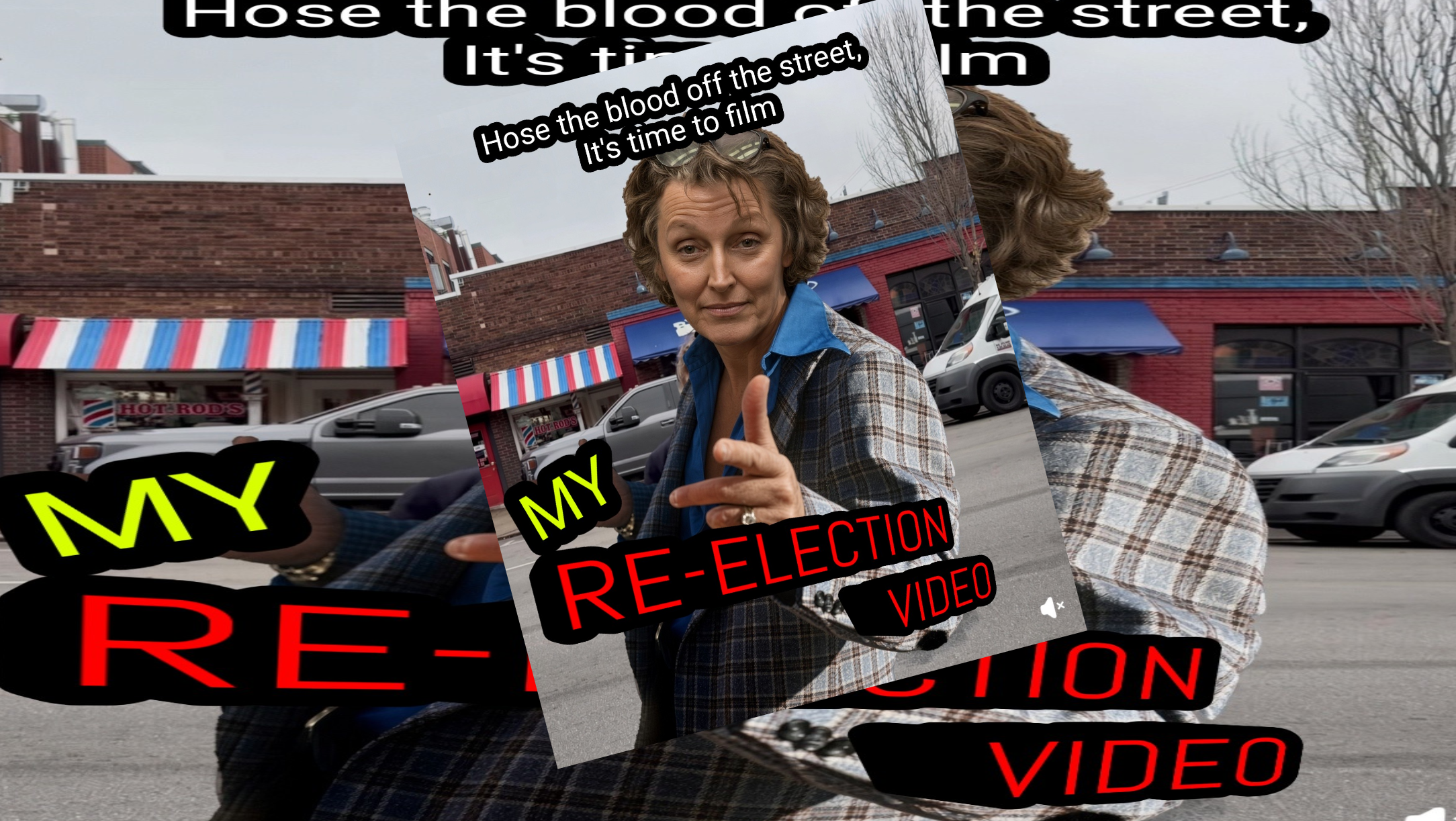
Thomson Launches Reelection Bid Days After Another Kirkwood Shooting
Mayor Kerry Thomson’s campaign announced a November 10 kickoff for her reelection effort at The Bluebird. The event is billed as a chance to “help kick-off Kerry’s re-election campaign.” The timing places the launch roughly nine days after Thomson addressed residents in a video following the November 1 shooting on Kirkwood Avenue that wounded seven people.
In that video, posted to the city’s Instagram and referenced in subsequent coverage, Thomson said gun violence had “visited a Bloomington celebration once again” and that “we should all be angry.” She noted that more than 20 officers had been stationed on Kirkwood as part of a pre-planned presence coordinated with IU and state police, then turned to Indiana’s “lax gun laws,” which she said prevent cities from developing safety measures at large gatherings. She said she is working with legislators to allow cities the same screening tools private venues already use, including metal detectors and cordoned areas. Coverage of the remarks appears at IPM and 95.3 MNC.
The November 1 incident was the third multi-victim shooting on or near Kirkwood in 2026. An April 26 pair of shootings during Little 500 weekend injured multiple people; a September 6 shooting outside the Monroe County Public Library sent one man to the hospital with a neck wound. In each case the city’s public response has centered on state preemption of local gun rules rather than on the pattern of late-night disturbances, out-of-town visitors, and the limits of presence alone as a deterrent. Critics have noted the gap. A November 1 analysis at the Hoosier Enquirer asked what operational changes followed the earlier shootings and whether staffing and enforcement decisions match the recurrence. Thomson has pointed to increased officer presence and recruitment; the same street has continued to produce shootings.
Housing and the Shape of the City
Thomson has also faced sustained criticism on housing. In April, six city council members issued a joint statement arguing that her Hopewell South plan for the former IU Health hospital site did not include enough permanently affordable units. They called for 50 percent permanently affordable housing or a compromise of 25 percent, with 15 percent reserved for households at or below 90 percent of area median income. The statement and the surrounding dispute are detailed in the Herald-Times. Thomson used her State of the City address to urge progress on the project, describing it as a “once-in-a-generation neighborhood.” Council members have described the disagreement as one of details and long-term affordability rather than opposition to redevelopment itself. Coverage of the address and the council response is available from the B Square Bulletin.
Related pressure has appeared around Seminary Pointe and the convention center hotel discussion. Thomson has said the city can pursue the right hotel location while working to preserve affordable units, but she has also noted that Senate Enrolled Act 1 has constrained city resources and that preserving units at Seminary Pointe would require a willing private partner. Residents have questioned whether those statements match the pace of displacement. A June city statement on the topic is posted via the Indiana Daily Student.
Development and the Changing Landscape
Larger development questions have accompanied the housing debate. Critics have argued that the administration has given corporations and large-scale projects considerable latitude while the physical character of neighborhoods long familiar to longtime residents continues to shift. The Summit District rezone, approved in 2024 and expected to yield thousands of units over a decade, and the ongoing Hopewell process are frequently cited as examples. Thomson has described complex zoning rules as a barrier to more housing and has pursued targeted updates to the Unified Development Ordinance. She has also acknowledged that undergraduate enrollment drives costs and that the city must balance growth with livability. A November 2025 city housing and homelessness report, summarized by the Indiana Daily Student, notes more than $9 million invested since 2024 in affordable housing, eviction prevention, and related programs, while also stating that one-time federal funds will not continue and that the city is “part of the problem” on some fronts.
The reelection kickoff arrives against that record. The campaign site and recent posts emphasize progress and partnership. The same weeks include a shooting response that located the primary constraint in state law, an ongoing housing dispute over permanent affordability on city-owned land, and continued questions about how much of Bloomington’s older commercial and residential fabric will remain once current projects are built. Those elements are now part of the public case both for and against another term.