LAWCO.NEWS
Mr.Newz Indiana
Fearing Complete Replacement, Bloomington City Council Bans “Super Intelligence”
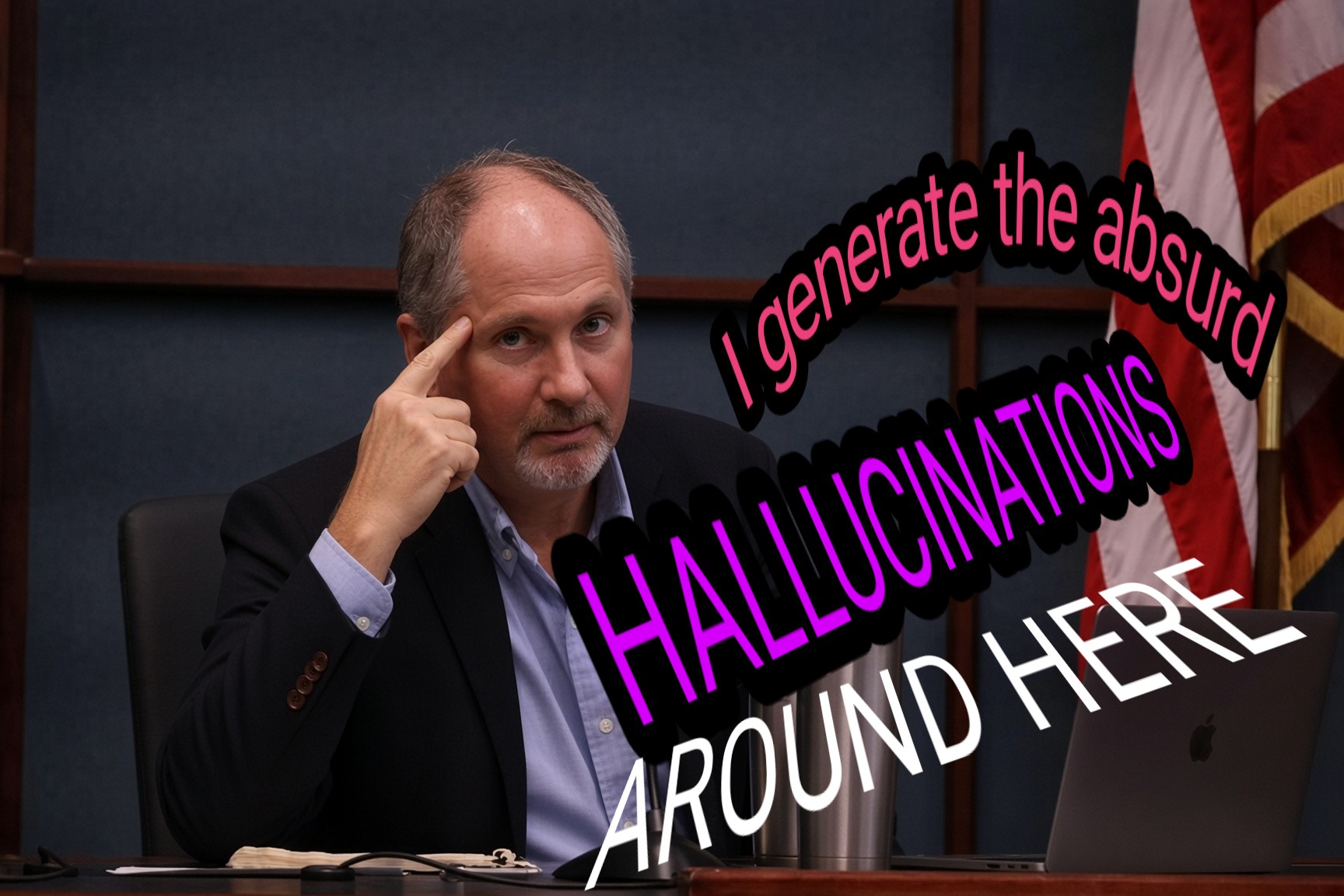
Fearing Complete Replacement, Bloomington City Council Bans “Super Intelligence”
Bloomington’s Common Council voted 7-0 on November 4 to adopt Ordinance 2026-29, a local ban on the distribution and deployment of artificial superintelligence inside city limits. The measure, sponsored by longtime District 4 Councilmember Dave Rollo, adds a new chapter to the city’s peace-and-safety code. It is the first ordinance of its kind in the country.
Rollo holds a bachelor’s degree in biology from Michigan State and a master’s in plant sciences from Indiana University. He spent roughly sixteen years as a research associate in molecular and microbiology at IU before leaving the lab in 2011 to co-own an organic farm west of town. He has been on the council since 2003, with a long record on sustainability, peak-oil awareness, and environmental commissions. He has no formal training or professional background in computer science, software engineering, or artificial intelligence. The ordinance he advanced treats a still-theoretical technology as an immediate local public-safety threat.
What the Ordinance Actually Does
Ordinance 2026-29 defines “superintelligence” as a system that significantly outperforms humans on essentially all cognitive tasks—a recursively self-improving form of artificial general intelligence with superhuman capability in agency, generality, and intelligence. It prohibits any person or corporation from distributing or deploying such a system into any home or business in Bloomington, for any purpose. The ban explicitly covers remote use: a browser session, app, API call, or connected device opened inside the city counts as deployment even if the servers sit outside Indiana. Violations are subject to the municipal code’s general penalty, up to $2,500 per day for a continuing violation, plus possible injunctive relief and referral to the county prosecutor.
The chapter is written as an interim measure. It automatically expires 91 days after the effective date of any comprehensive Indiana legislation that establishes a framework for “provably safe” superintelligence. Absent that, the council can lift the ban only after making specific findings—including a scientific consensus that the technology is safe to a 99.9999 percent certainty standard—and after approval from more than 95 percent of the city’s registered voters. The text and accompanying materials are available through the city’s legislative packet and were summarized by the Indiana Daily Student and the B Square Bulletin.
Rollo had previously sponsored Resolution 2026-10 in June, which passed 9-0 and called on state and federal officials to study the existential risks of advanced AI and consider a moratorium. The November ordinance is the local follow-through. In the staff memorandum he framed the absence of higher-level rules as a governance void that local government should fill.
A City Council’s Proper Reach
The technology the ordinance regulates does not yet exist in the form described. Current large language models and related systems fall well short of the recursive, generally superhuman standard written into the code. Enforcement against a remote system that has not been built would require the city to identify and penalize users or providers for accessing something that, by the ordinance’s own definition, is not present. Questions of municipal authority over internet-mediated access, potential conflicts with state law, and the practical impossibility of the 95 percent registered-voter threshold have already been raised in local coverage and outside analysis.
Bloomington’s council has spent recent years on housing shortages, repeated shootings on Kirkwood Avenue, budget pressure from state property-tax changes, and the limits of local police presence. Those problems are measurable and local. A ban on a class of technology that has not been deployed, written by a councilmember whose professional training is in biology and organic farming, raises a narrower question: whether a municipal legislative body is the right place to define, prohibit, and set near-impossible conditions for the future use of artificial superintelligence. The ordinance is now part of the city’s code. Whether it belongs there is a separate matter.